
When I first arrived in Hokkaido, I was captivated by colour.
The crimson crowns of cranes against fresh snow. The blue hues of winter mornings. The warm glow of sunrise spilling across frozen landscapes.
Naturally, those scenes became the foundation of C1 — Vibrant Hokkaido.
Vibrant Hokkaido

Several months before travelling to Hokkaido, I found myself doing something I had not originally planned.
But as the journey unfolded, I found myself increasingly drawn to something else.
Not colour.
Time.
The more I travelled through Hokkaido, the more I felt that many of its landscapes, traditions, and wildlife existed outside the rhythm of the modern world. A crane standing motionless in the snow, a sea eagle gliding across a winter valley, steam rising through an outdoor onsen—these scenes felt as though they could belong to today, fifty years ago, or perhaps even longer.
That feeling became the inspiration for C2.
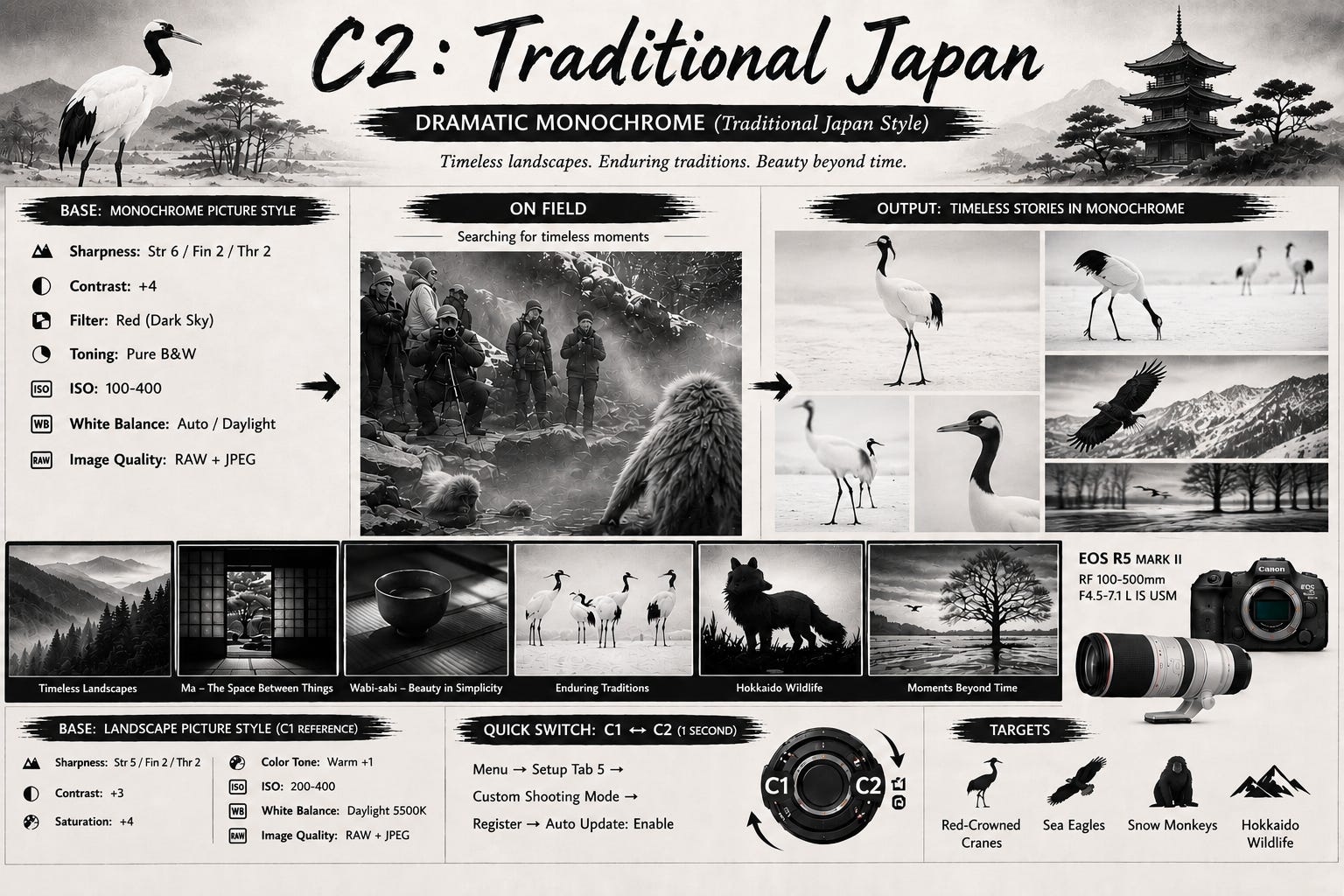
Why Monochrome?
For me, monochrome was never about removing colour.
It was about removing time.
Colour often anchors a photograph to a specific moment. We recognise the palette of a season, the look of a particular era, or the visual characteristics of modern life.
Monochrome strips away those references.
What remains are the essential elements of a photograph:
Light
Form
Texture
Atmosphere
Emotion
More importantly, it allows a scene to feel timeless.
In Hokkaido, monochrome became the most natural way to express what I was experiencing. The enduring elegance of Japanese culture, the quiet beauty of winter landscapes, and the sense that many traditions continue largely unchanged despite the rapid pace of the world around them.
Rather than documenting Japan as it appeared before me, I wanted to create images that felt suspended between past and present.
Building C2
The objective was not to create dramatic black-and-white photographs.
Instead, I wanted to create images that felt calm, restrained, and enduring.
The settings were designed to emphasize tonal separation rather than contrast alone. Snow remained soft and luminous. Shadows retained detail. Blacks provided structure without overwhelming the frame.
The result was a visual language inspired less by spectacle and more by permanence.
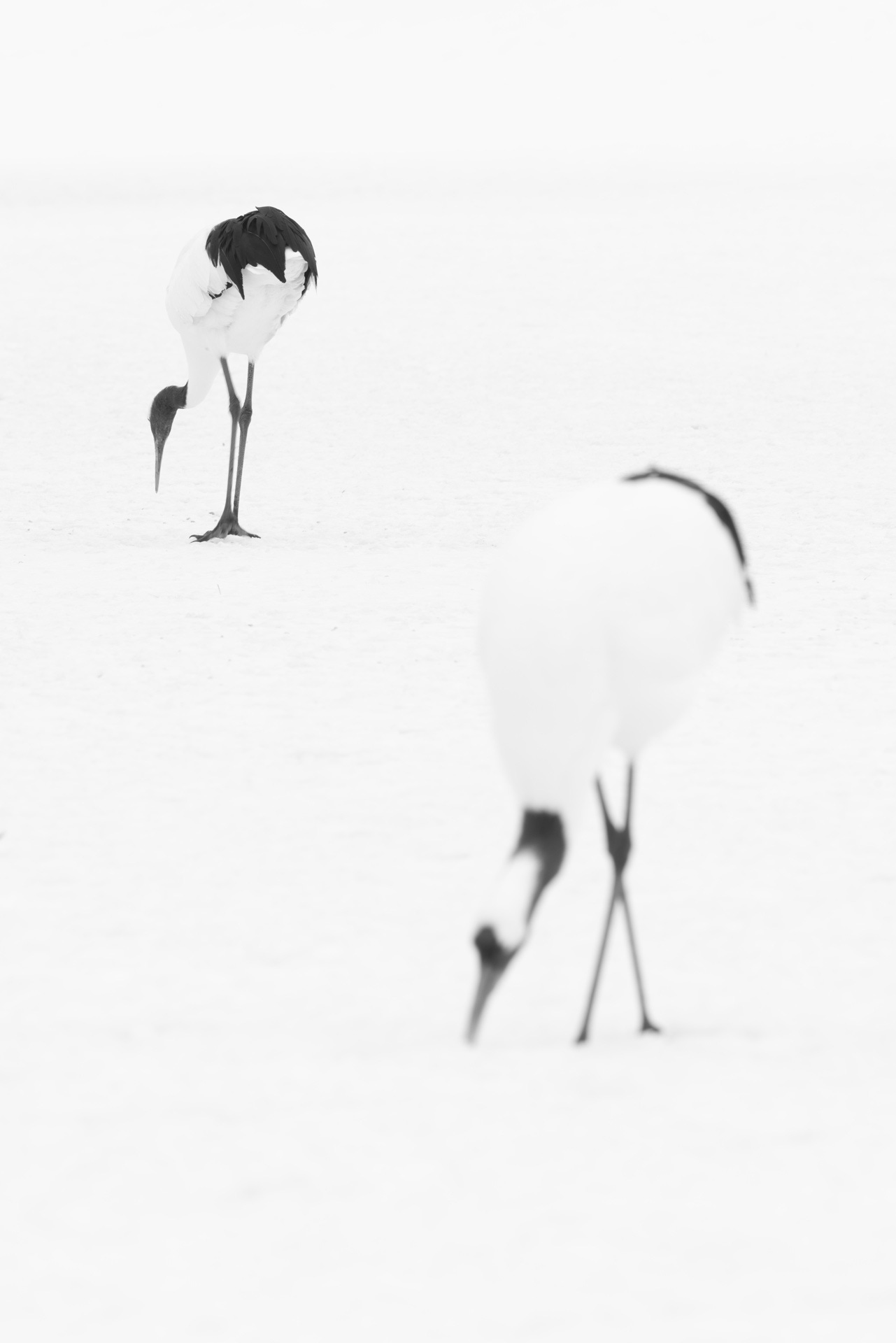
A crane became a silhouette against endless snow.
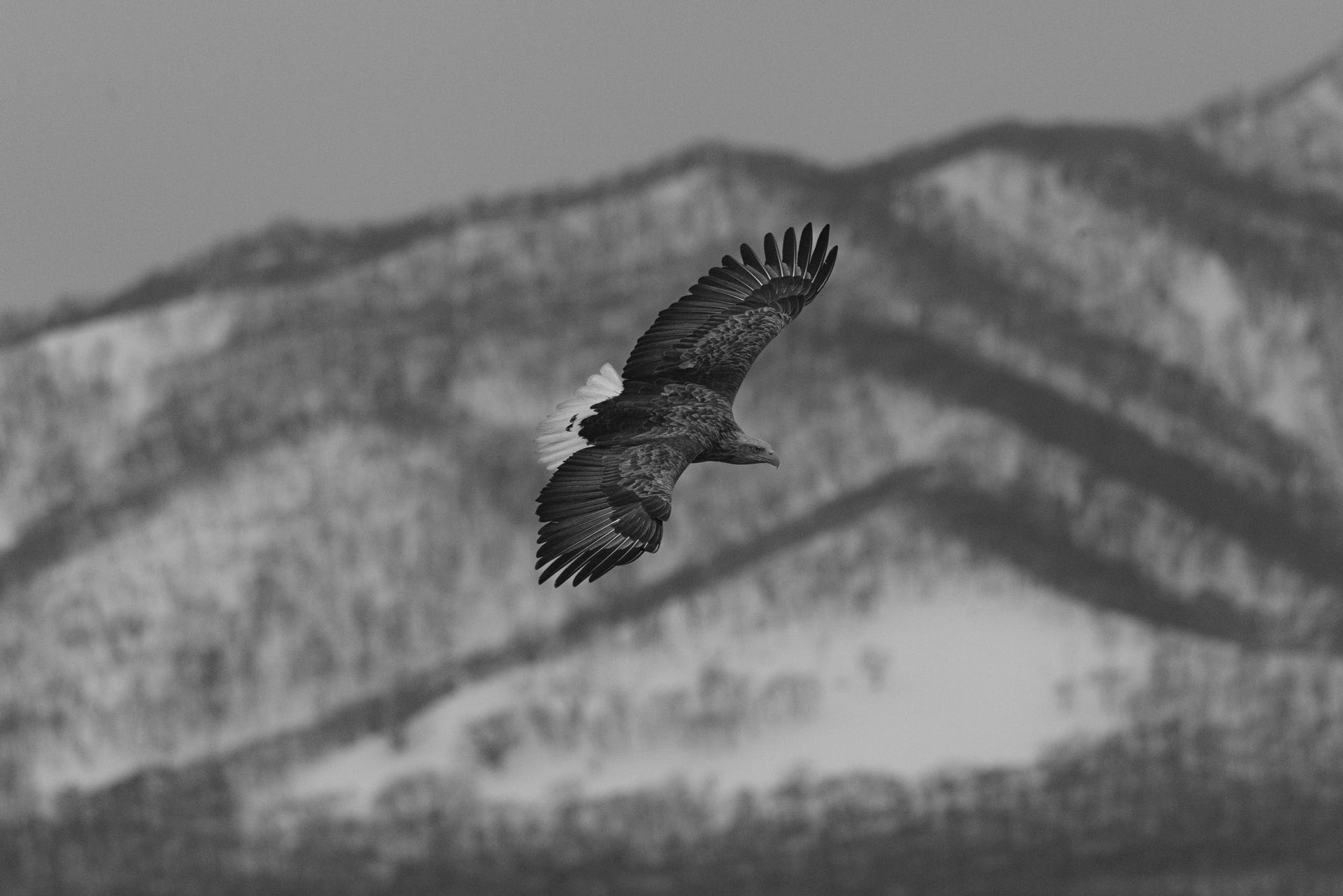
An eagle became a dark brushstroke against mountain ridges.
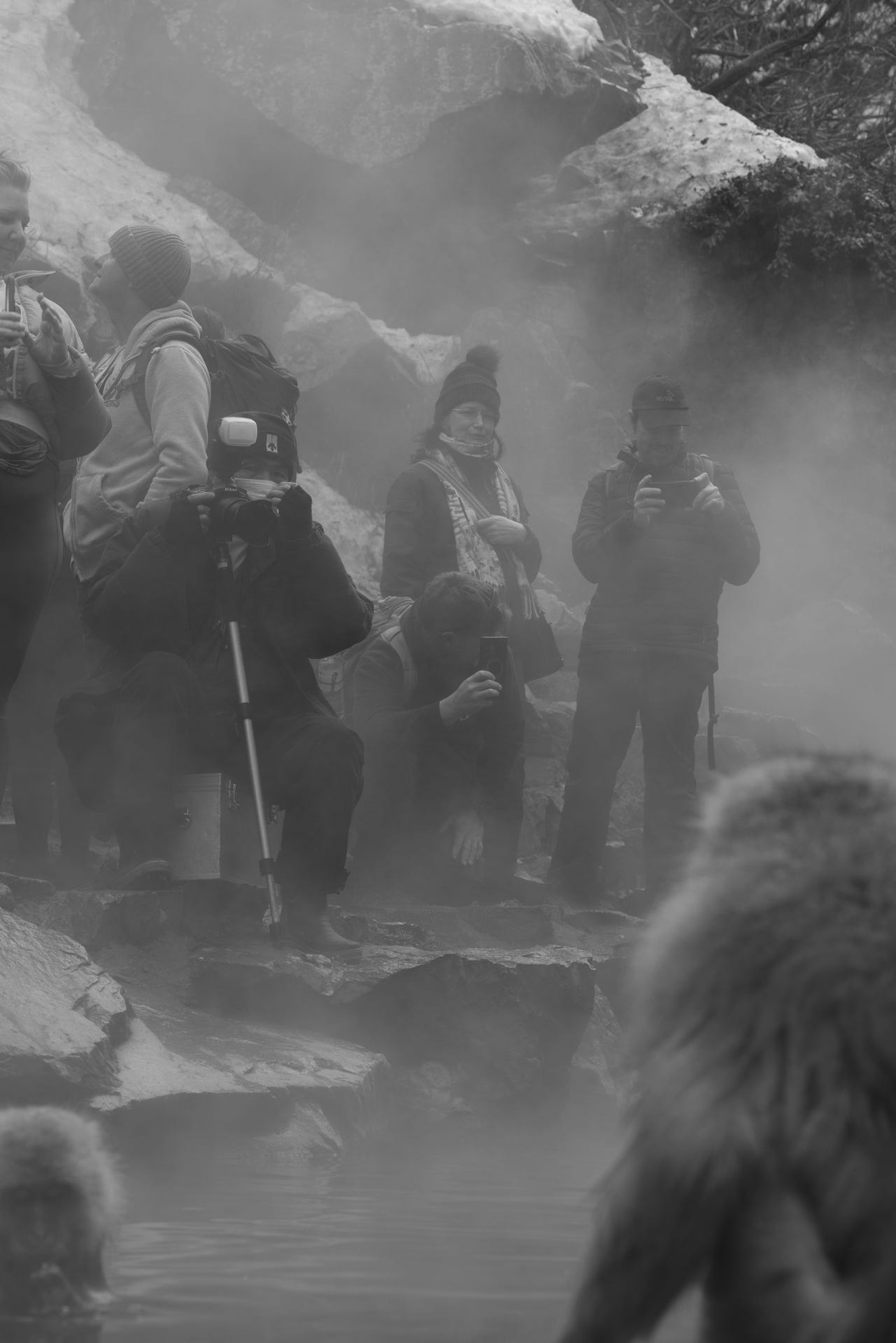
Steam transformed a crowded onsen into something almost dreamlike.
The photographs began to feel less like records of a journey and more like fragments of memory.
What I Found
The most unexpected outcome was how much attention shifted from the subject to the feeling of the scene.
Without colour competing for attention, subtle details became more important:
The curve of a crane’s neck.
The delicate footprints pressed into fresh snow.
The layers of mist drifting through an onsen.
The patterns of winter forests beneath a soaring eagle.
Many photographs became simpler, yet somehow more evocative.
The absence of colour encouraged me to focus on what initially drew me to the frame rather than what made it visually striking.
The Images
The red-crowned cranes became symbols of grace rather than colour.
Against the snow, they appeared almost sculptural—reduced to elegant lines, shapes, and movement.
The sea eagle soaring across Hokkaido’s mountains felt timeless, its silhouette echoing the rugged landscape beneath it.
The onsen scene revealed a different side of Japan. Visitors gathered quietly in rising steam while nature enveloped the entire experience, blurring the distinction between people and place.
Even moments of intentional blur and abstraction began to feel more meaningful in monochrome, emphasizing atmosphere over description.
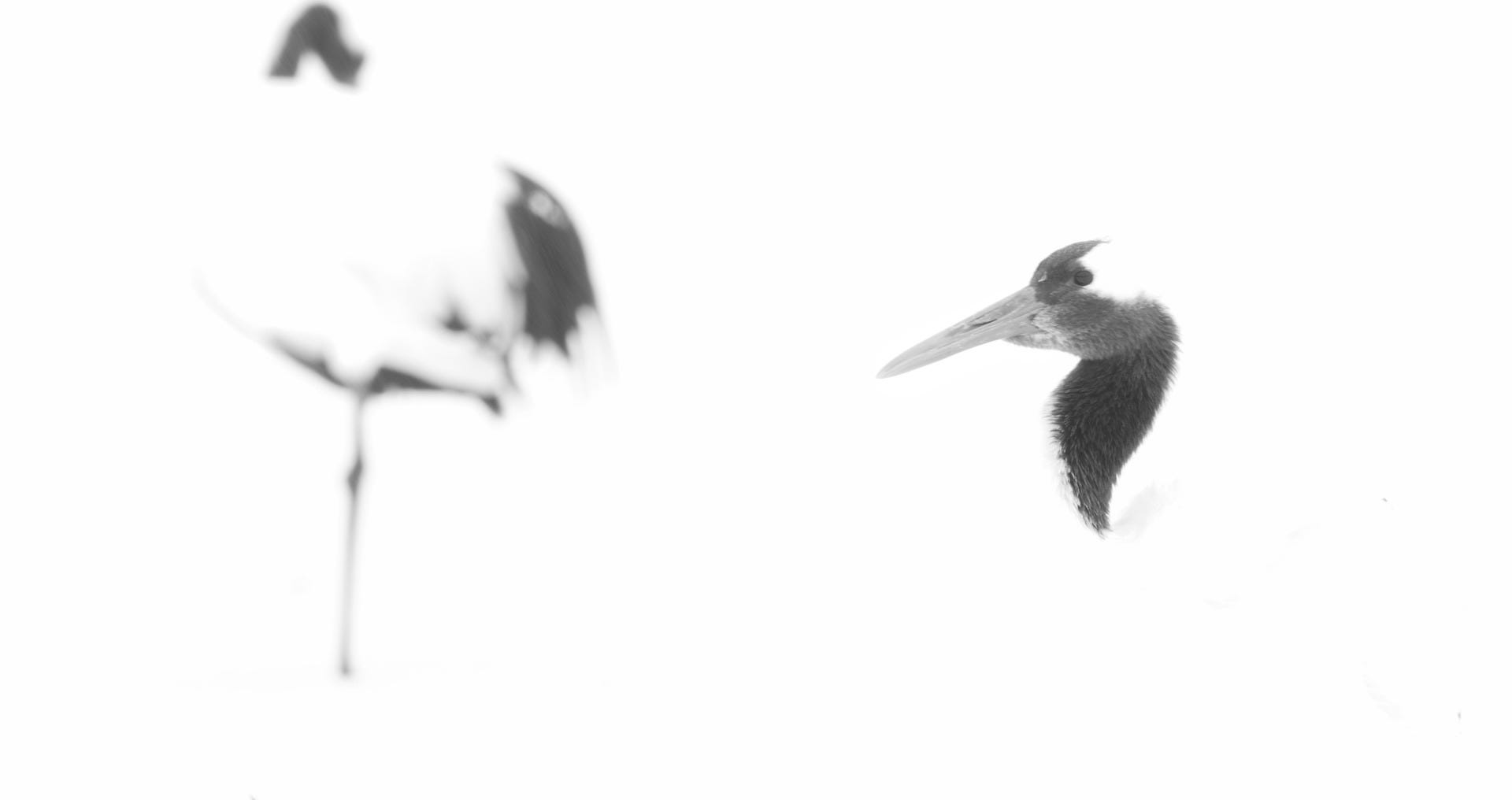
Each image seemed less concerned with documenting what was there and more interested in conveying what it felt like to stand there.
What C2 Taught Me
Photography often encourages us to capture moments.
Monochrome encouraged me to capture permanence.
It reminded me that some places possess a character that transcends a single season, a single journey, or even a single generation.
Hokkaido’s wildlife, landscapes, and traditions carry that quality.
By removing colour, I wasn’t simplifying the story.
I was revealing the part of it that felt enduring.
C2 — Traditional Japan (Monochrome) is my attempt to explore the timeless side of Hokkaido—a visual journey through landscapes, wildlife, and traditions that feel as relevant today as they might have decades ago, expressed through a monochrome palette that celebrates simplicity, atmosphere, and the enduring beauty of Japan.
